- "M-1". Released: 2025.

Audio Guide _Walkthrough
Prologue
Welcome to Uncounted Rounds, the latest exhibition by Thukral and Tagra. This research-led project began in 2011, tracing the artists’ family histories, their engagement with the farming community in Punjab, and their deepening interest in ecology and the human condition.
Over the years, it has evolved into an ongoing exploration of memory, labour, and collective experience.
Uncounted Rounds marks the 13th iteration of this long-term project, expanding on ideas and documentation published in their 2021 publication, Weeping Farm.
Premise
Uncounted Rounds positions the akhara (wrestling ground) and the farm as parallel sites of struggle, repetition, and endurance within Punjab’s cultural and political landscape. Both are defined by cycles: the wrestler returning to the pit, the farmer returning to the field. Each cycle demands stamina, discipline, and resilience, yet both are equally marked by fatigue, precarity, and the erosion of bodily limits. The wrestling ground, once associated with strength and victory, becomes a metaphor for a terrain rendered uneven, mirroring the agricultural field fractured by land division, climate volatility, debt, and systemic neglect.
The title insists on what remains unacknowledged and unrecorded. It recalls the 733 farmers who died during the 2020–21 protests: lives that remain absent from official statistics and collective memory; their sacrifices are invisible. These “uncounted rounds” signify not only the uncounted toll of protest but also the unmeasured labour and care embedded in agrarian life, cycles of endurance that rarely find representation.
WRESTLING AND FARMING
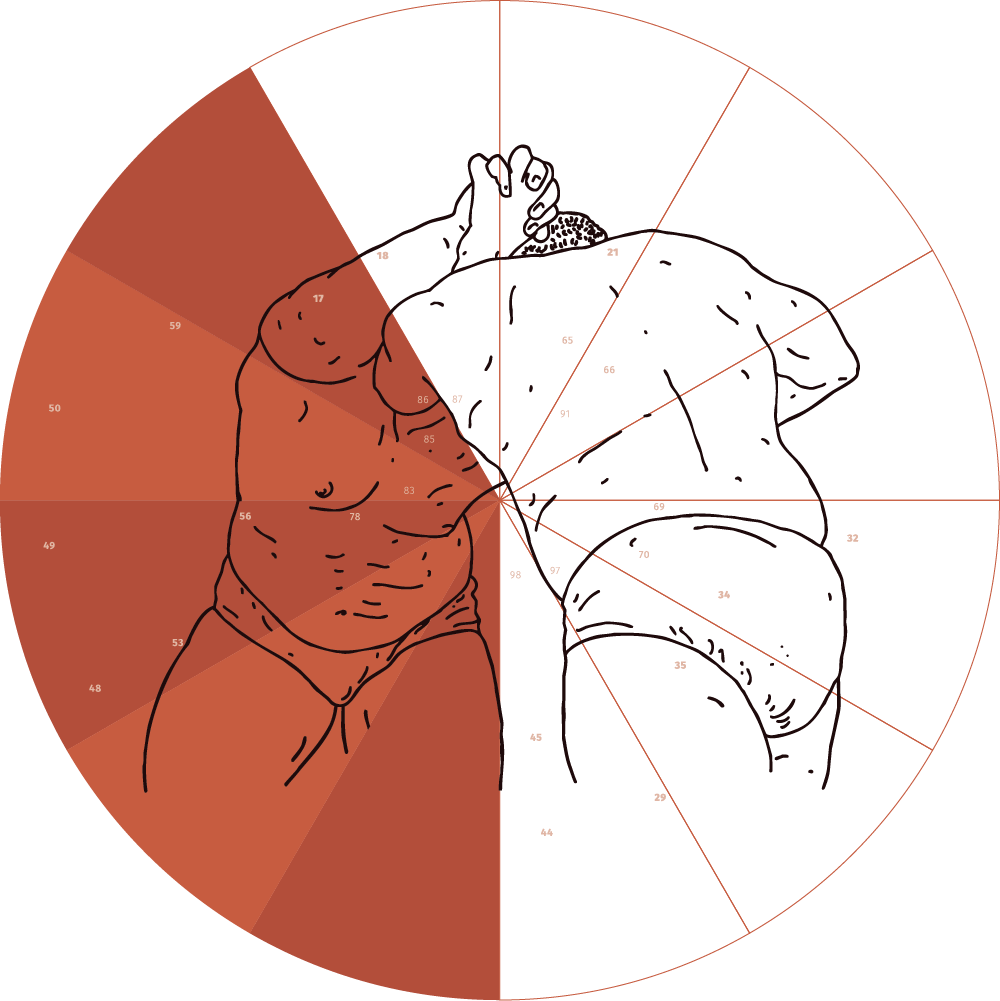
For several decades, our lives have been shaped by the twin practices of kheti (farming) and kushti (wrestling). Farming is the predominant livelihood of Punjab, the land we come from, while wrestling has been an enduring part of our family history and continues to resonate with us today. At first, they appear as separate domains, one bound to the cycles
of cultivation, the other to the discipline of sport. Yet both are fundamentally practices of the ground and soil.
The wrestler enters the akhara, training his body against the resistance of the earth beneath him. The farmer steps into the field, sowing seeds into soil that demands equal perseverance and care. In both, the body meets the ground in an intimate struggle, persistence measured not in moments of triumph but in the capacity to endure.
Work 1
Lexicon of Distress
Vinyl wall installation,
2012 – 2023
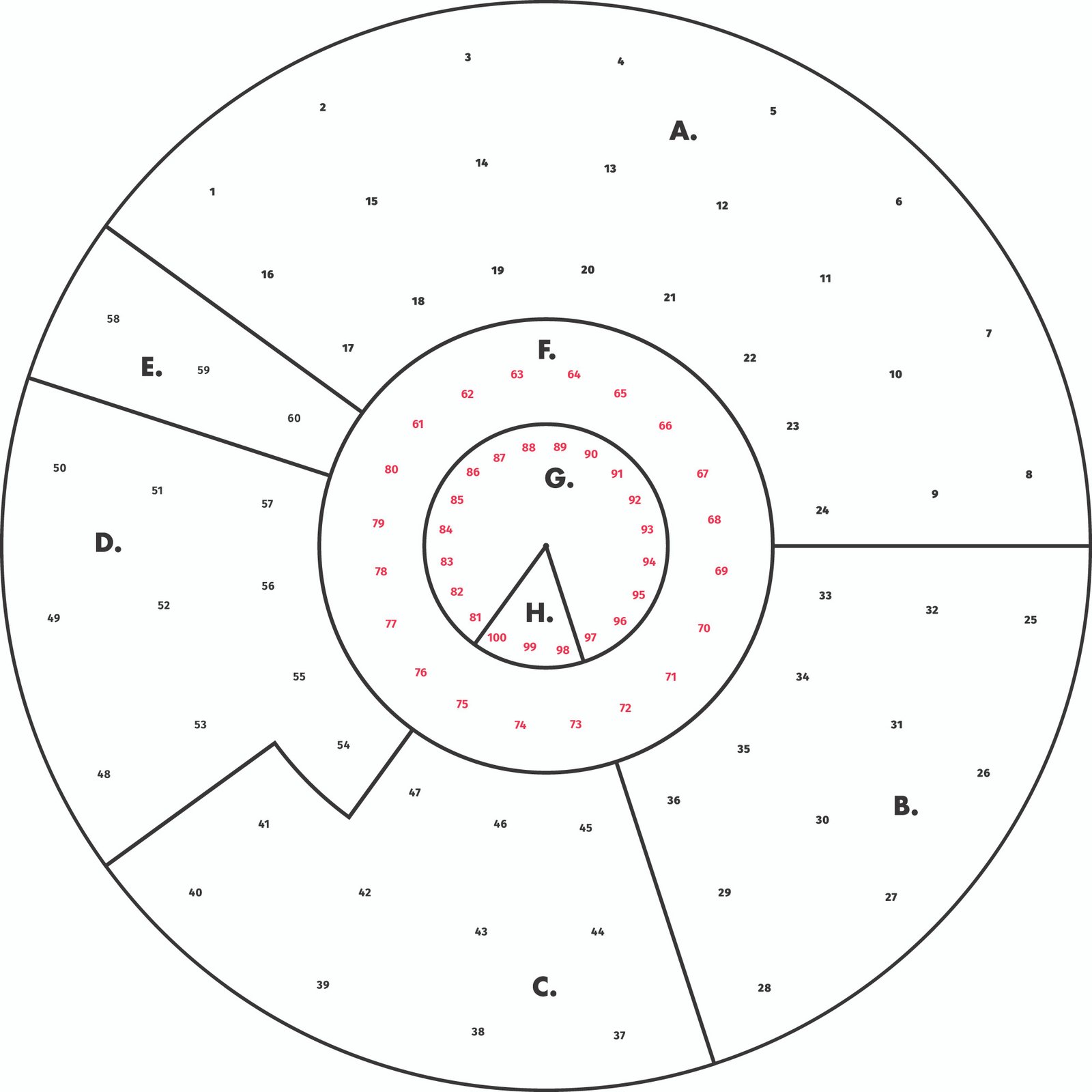
Lexicon, a vinyl wall installation, is drawn from our long engagement with agrarian realities. A living glossary that emerges over 9 years of learning, about the struggles of farming communities with broader systems of survival, resilience, and play. Building on the rubrics to understand the complexity of agrarian crises, we drafted a graph into 100 pieces. This information is the ground we stand upon, and understand and expand what agriculture means today.
Work 2
FARMER IS A WRESTLER
Wrestling Mat in Iron
15 feet
2025
Once a site of movement and contest, the iron wrestling mat now stands folded, heavy, and unyielding. Though no longer playable, it carries the memory of bodies that once struggled upon it. The welded scars on its surface not only mark wounds, but also the shared histories of persistence.
The softness that once received the wrestler’s body has dried into rigidity, making play upon it impossible. Lines and drawings that once animated its surface now appear as welded scars, traces of wounds inscribed in metal, refusing erasure.
In this stillness, the mat holds space for kinship and solidarity. It reminds us that bonds are not only formed in action but also in the quiet recognition of fatigue and struggle. To stand before it is to be with those whose rounds remain uncounted.
Work 3
Bread Circuses and TBD
Oil on Canvas, Sizes variable,
2019
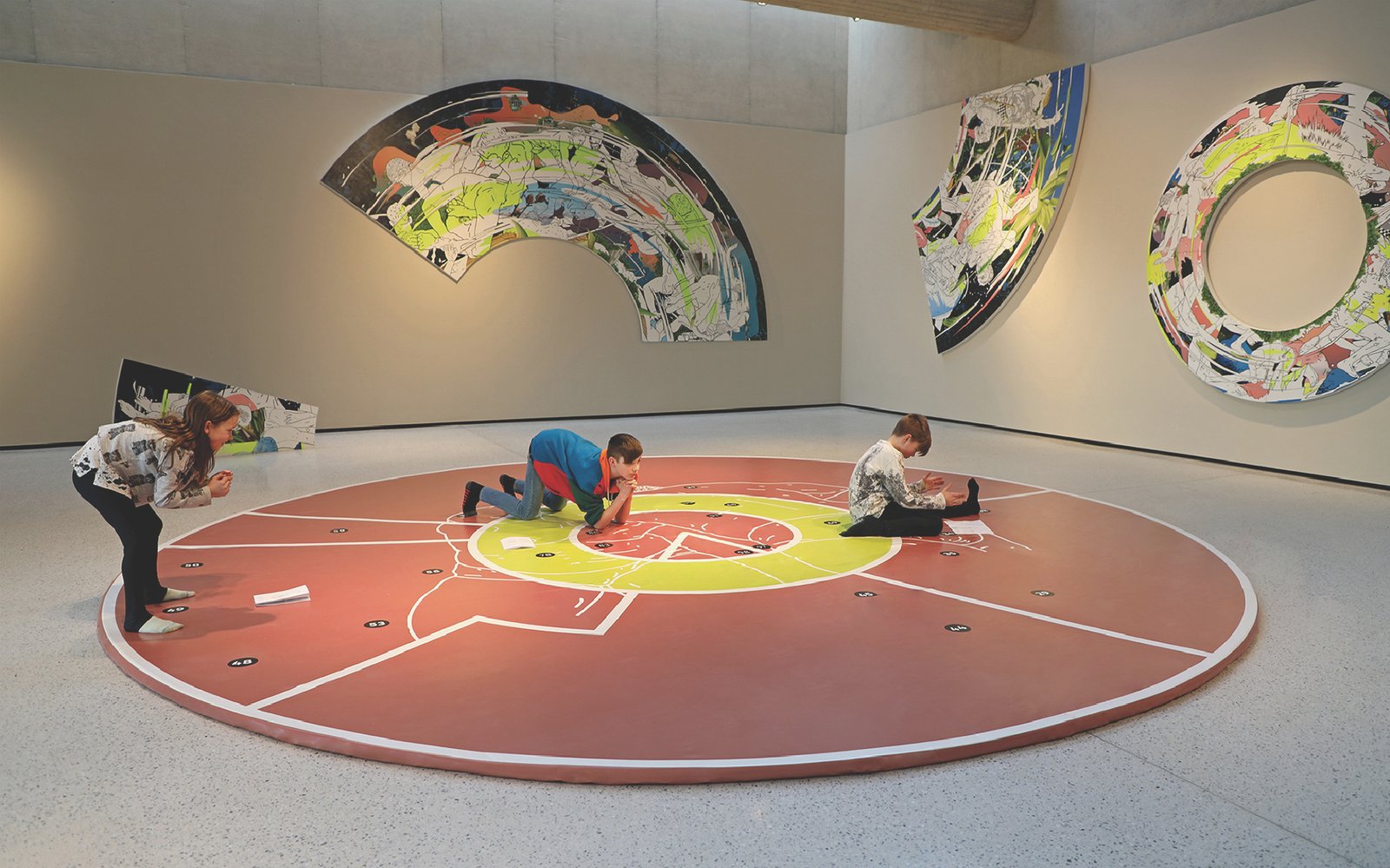
The wrestler enters the akhara, training his body against the resistance of the earth beneath him. The farmer steps into the field, sowing seeds into soil that demands equal perseverance and care. In both, the body meets the ground in an intimate struggle, persistence measured not in moments of triumph but in the capacity to endure. Bread Circuses and TBD is a monumental oil on canvas, first created for the exhibition Bread, Circuses and TBD at Yorkshire Sculpture Park in 2019, and now presented in India for the first time.
The form of the works is derived from the research chart with 100 points. Then divided into 7 broad sections. Each section is one painting.
Work 4
GINTI
Drawing in Iron + Sound
733Names.MP3
2025
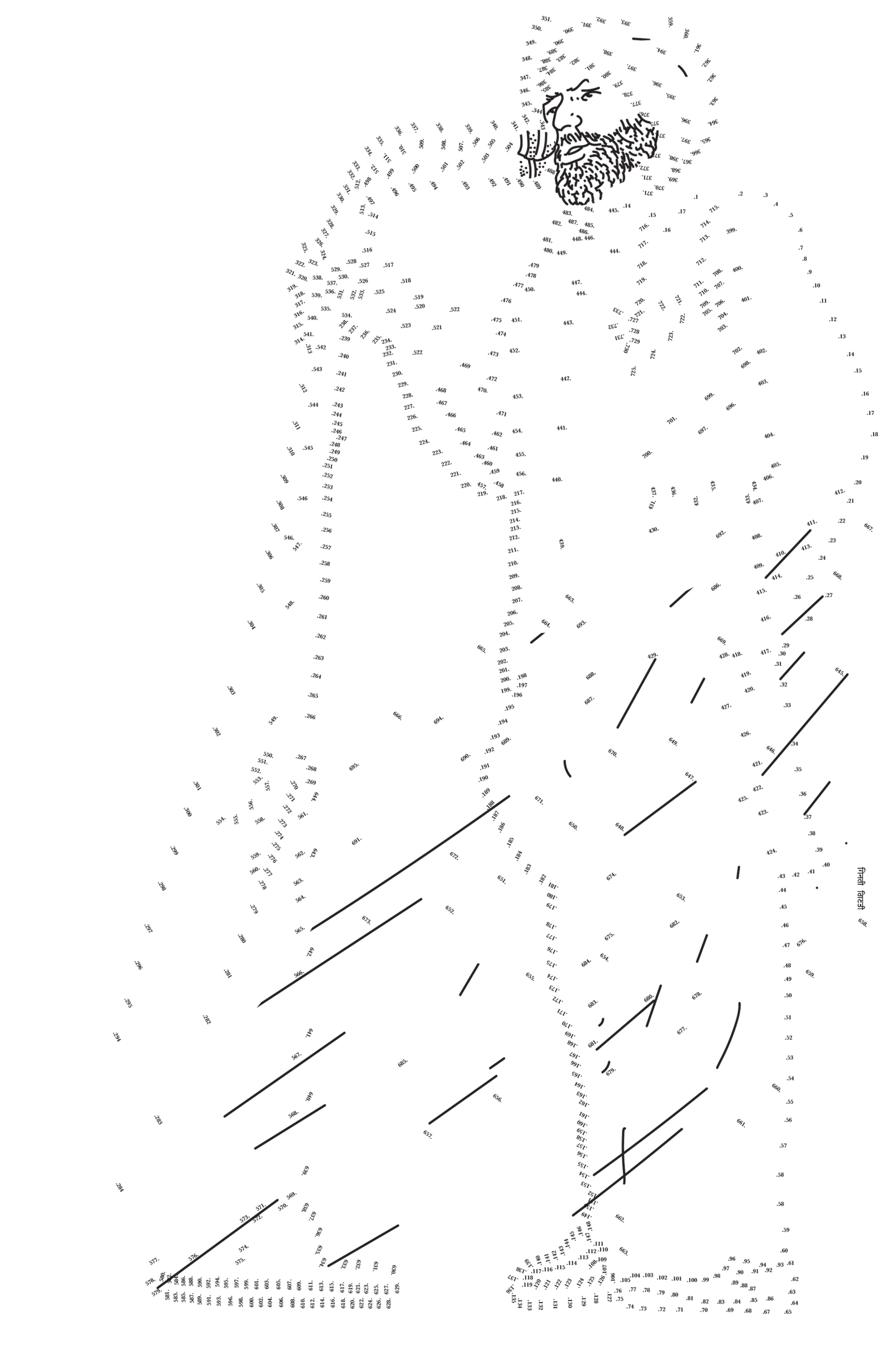
As fact-finders, Thukral and Tagra Studio excavate the silenced details of the 733 farmers who died during the historic 2020–2021 protests. These deaths, largely unacknowledged, remain absent from official records and collective memory, rendering the very bodies of the dead invisible.
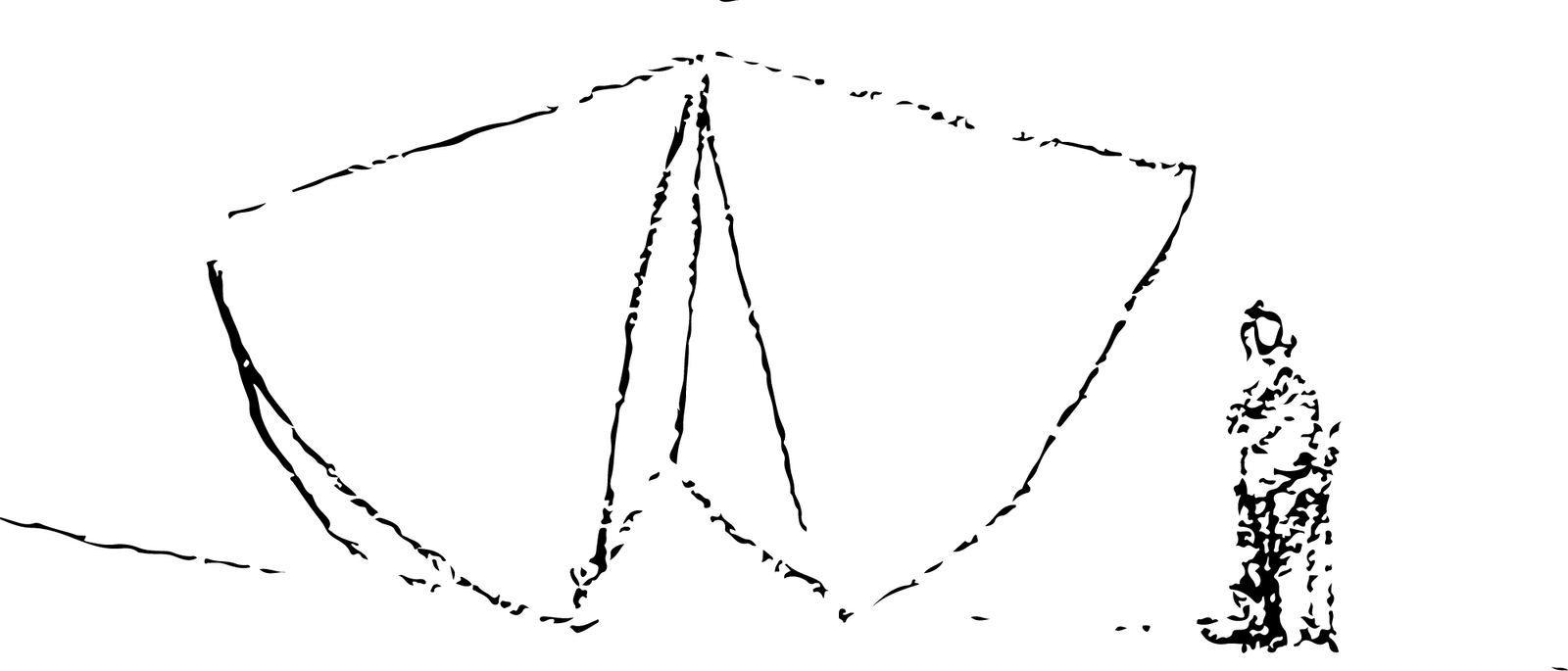
Here, drawing becomes the backbone of memory, with a 12-foot welded drawing that illustrates a local teacher with a microphone in hand, managing the protest on the first day at Tikri. From this figure emerges a voice-over marathon reciting the 733 accounts, names, genders, places, and, where known, the reasons for their deaths.
Work 5
Trolley Times, Archive
Offset plates, Newsletter +
Protest Archive T&T studio
2018 onwards)
2020
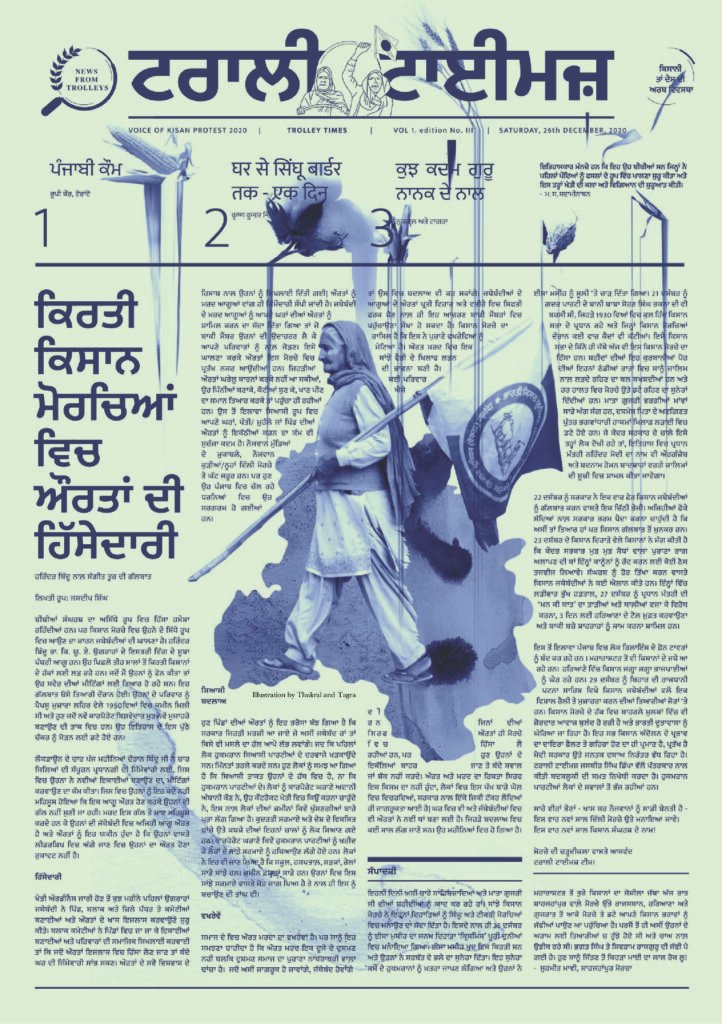
Trolley Times, a newsletter created for the farmers, became a living archive of the world’s largest protest in 2020–21. As part of the team at the protest site, Thukral and Tagra contributed directly to its making. This room gathers the archive material presented here for the first time, not only as documentation, but as an act of preserving collective memory. Each team member’s role shaped this urgent intervention, reinforcing solidarity with the movement. The side room of NM includes a film recording the printing of the newspaper, foregrounding the process of its first edition. Thukral and Tagra were especially involved in conceiving the form, illustrations, and design of the newsletter, as well as in supporting its printing and distribution across protest sites, ensuring that the voices of the movement were both recorded and remembered.
The site is grounded with a floor of yellow tarpaulin, the signature material that once sheltered makeshift tractor-trolley camps during the protest. Alongside Thukral and Tagra, the offset printing plates of the newsletter are presented as new works, their significance transformed into memorials of time, labour, and collective resilience.
With a long-standing commitment, the Thukral and Tagra Foundation continues to support farming communities, many of whom have been displaced by devastating floods in Punjab. Proceeds from the sales will go directly toward repair efforts and relief for those affected by the ongoing crisis.
Mentioning – Trolley Times Team
Navkiran Natt, Jassi Sangha, Surmeet Maavi, Gurdeep Dhaliwal, Ajaypal Natt, Jasdeep Singh, Narinder Bhinder and countless invisible people who made this the highlight of the movement.
Work 6
Weeping Farm
Draiwngs + Publication + Gameplay
2012 – 2023
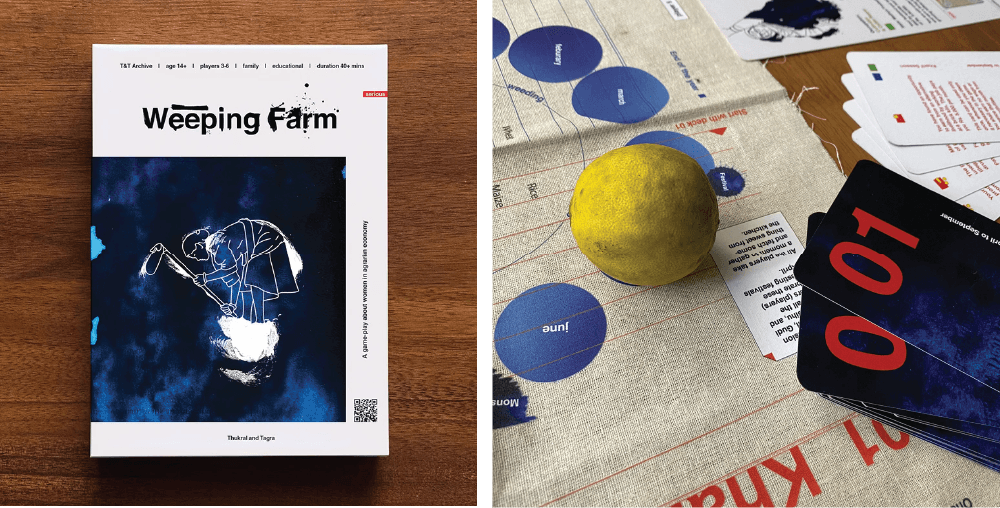
Weeping Farm
40 minutes for survival.
Weeping Farm explores the daily trials and tribulations of women farmers across India. Despite not being legally recognised as farmers, women are equal participants in farm labour. However, with evolving agrarian jurisdictions, privatisation, overdue debts, and climate change, farmers often face odds in making ends meet. Weeping Farm acts as an intervention to familiarise the players with the realities of rural life. Each player takes on the character of a woman farmer from across India for two farming cycles – or one year. At the end of 40 minutes, the player with the highest amount of debt is out of the game – signalling how every 40 minutes, a farmer commits suicide.
Work 7
Smoking Gaze
Oil on Canvas
Sizes variable
2019
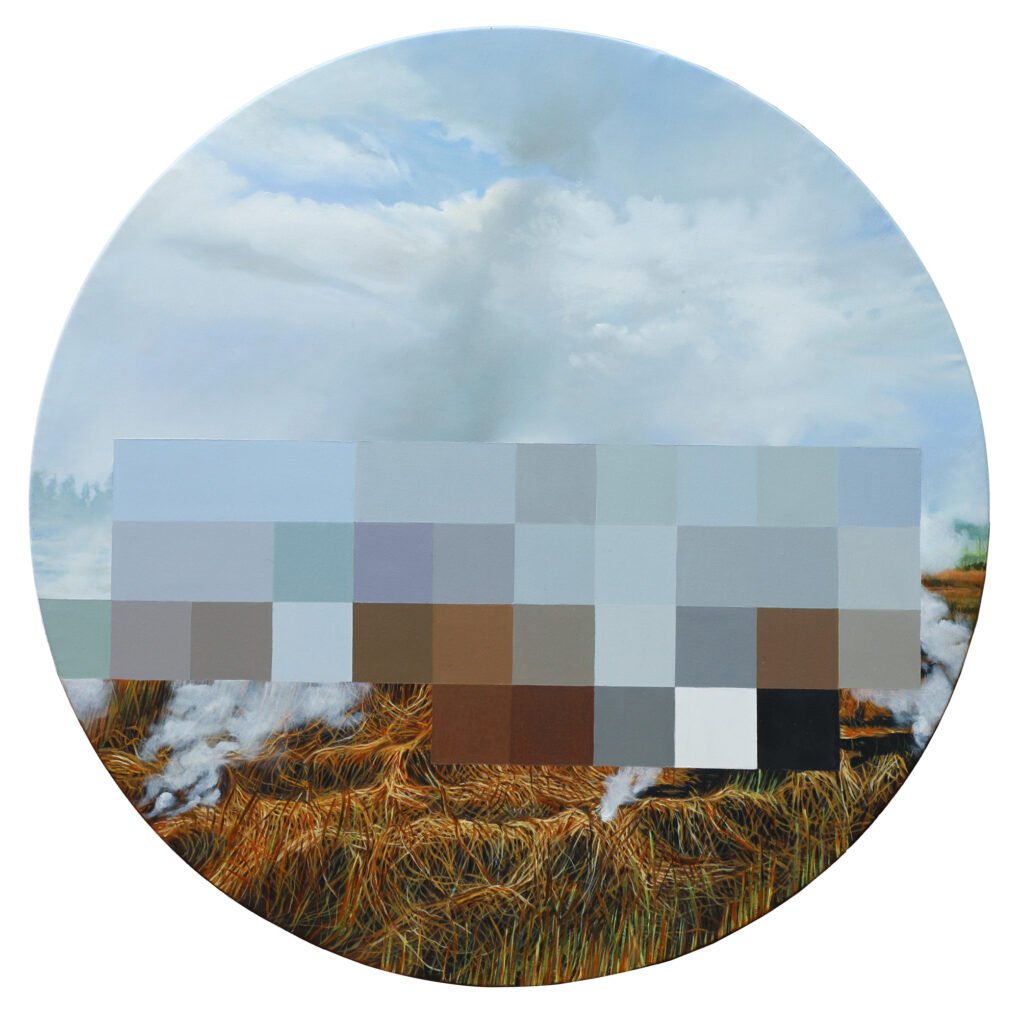
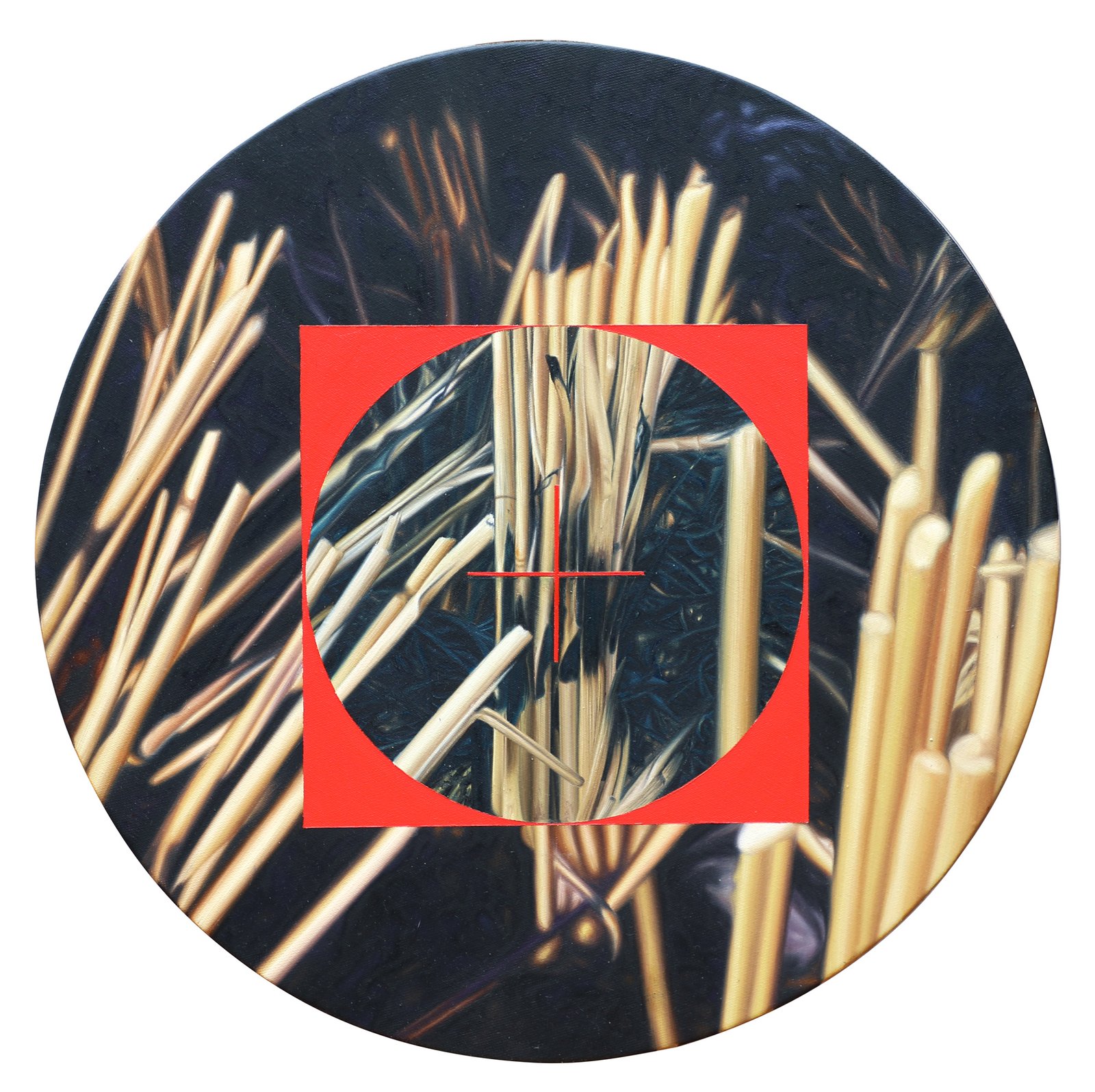
Smoking Gaze is a new series of five oil-on-canvas works that confronts stubble burning as one of the most argued and most politicised points in the ongoing debates around farming in India. Cast repeatedly in public discourse as the singular cause of ecological damage and urban pollution, stubble burning has become a smokescreen, narrowing complex agrarian realities into a spectacle of blame.
Copyright 2025